

Planning a new floor starts with understanding the factors behind LVP installation cost Maryland homeowners may face. Room size, floor condition, plank type, preparation, and installation method can all affect the final project. Knowing these details early can help you plan the work with fewer surprises.
At JG Carpet Contractors LLC, we help homeowners understand the steps involved before installation begins. If you are comparing options, our luxury vinyl plank installation in Maryland page explains more about this flooring service and what to expect.
Main Factors That Shape Your LVP Installation Cost
The LVP installation cost Maryland homeowners should plan for depends on more than the flooring material. A simple room with a clean, level surface usually requires less preparation than a space with damaged flooring, several corners, stairs, or uneven areas.
Homes across Maryland can also have very different floor conditions. Older surfaces may need repairs or extra preparation before new planks can be installed. Important factors that can affect the project include:
- Total room size and layout
- Condition of the existing subfloor
- Removal of old flooring materials
- Type and thickness of the selected planks
- Click-lock or glue-down installation method
- Stairs, closets, doorways, and other detailed areas
- Trim, transitions, and finishing work
Looking at the complete scope of work gives you a more useful estimate than focusing on one part of the installation alone.
How Does Room Size Change Your Project Cost?
Room size is one of the first details considered when estimating the total cost for luxury vinyl floor installation. Larger spaces need more material, but the shape of the room can be just as important. Wide, open rooms often require fewer cuts than spaces with closets, islands, fireplaces, or several doorways.
With JG Carpet Contractors LLC, you can review the full installation area before work begins. Accurate measurements help determine material needs and reduce avoidable waste. If your project is in Baltimore, explore our LVP installation service in Baltimore for more location-specific information.
Vinyl Plank Flooring Cost Per Square Foot Factors
Understanding vinyl plank flooring cost per square foot requires looking at both the product and the work needed to install it. Luxury vinyl planks come in different thicknesses, wear layers, textures, backing types, and installation systems. These differences can change preparation and labor needs.
The installation method also matters. Click-lock flooring creates a floating surface, while glue-down flooring attaches directly to the prepared subfloor. Each method has different requirements. Other details that may influence the project include:
- Plank construction and thickness
- Attached backing or separate underlayment
- Flooring pattern and direction
- Amount of cutting around fixed features
- Condition and type of the surface underneath
Instead of choosing flooring only by appearance, consider how the product works with your room and existing floor. Our luxury vinyl floor installation service provides more information about the installation process.
Subfloor Preparation Before Installing Luxury Vinyl Planks
A clean, stable, and level subfloor supports a better finished floor. Small bumps, cracks, loose areas, old adhesive, or uneven sections can affect how luxury vinyl planks sit. Concrete areas may also need attention when moisture conditions are a concern.
Our team at JG Carpet Contractors LLC can evaluate the installation area as part of planning the project. Depending on the existing surface, preparation may involve:
- Removing loose debris and old materials
- Cleaning adhesive or residue
- Patching cracks or damaged areas
- Leveling uneven sections when necessary
- Reviewing moisture conditions over concrete
Preparation can affect how much does LVP installation cost because additional floor work requires more labor. Addressing these issues before installation also helps create a smoother and more consistent finished surface.
Old Flooring Removal and Installation Method Choices
Existing flooring can influence the LVP installation cost Maryland project owners need to consider. Carpet may require removal of padding and tack strips, while tile or glued flooring can require more work. Old adhesive, damaged underlayment, baseboards, and transition pieces may also need attention.
In some spaces, luxury vinyl may be installed over an existing floor when the surface is secure, flat, and suitable for the selected product. This should be decided after the current floor is inspected rather than assumed before the project begins.
Installation method is another important choice. Click-lock planks connect at the edges to create a floating floor. Glue-down planks use adhesive to attach directly to the prepared surface. The right method depends on the flooring product, room conditions, and intended use.
Planning Stairs, Transitions, Trim, and Final Details
Detailed areas often require more measuring and cutting than open floors. Stairs, door frames, closets, vents, narrow spaces, and rooms with unusual angles can add labor and create additional material waste. Showing every installation area before receiving an estimate helps define the full project scope.
Finishing details also matter when estimating the total cost for luxury vinyl floor installation. Baseboards, quarter-round trim, stair pieces, and transition strips can create clean edges where the new floor meets walls or other flooring materials.
Before installation, it is useful to review the room and confirm which details are included. You can also discuss your flooring project with our team so the installation area and preparation needs can be considered together.
Frequently Asked Questions
How much does LVP installation cost in Maryland?
There is no single amount that fits every home. Room size, floor condition, removal work, plank type, installation method, stairs, and finishing details can all affect the project. When you choose JG Carpet Contractors LLC, we can review the work involved before installation. Visit our contact page to discuss your LVP installation.
What affects vinyl plank flooring cost per square foot?
Product thickness, wear layer, backing, installation system, room layout, and subfloor condition can all influence the overall project. Preparation and detailed cuts may also add work. You can review our luxury vinyl floor installation information to understand more about the service.
Can LVP be installed over an existing floor?
In some cases, yes. The existing surface normally needs to be flat, secure, clean, and compatible with the selected flooring. Damaged, loose, or uneven flooring may need removal or preparation first. Our Maryland luxury vinyl plank installation page provides additional service details.
Does subfloor preparation affect installation cost?
Yes. Cleaning, patching, leveling, removing adhesive, or addressing damaged areas can add labor to the project. Proper preparation is important because luxury vinyl performs best when installed over a stable and even surface.
Should I choose click-lock or glue-down LVP?
The best choice depends on the flooring product, subfloor, room conditions, and how the space will be used. Click-lock systems create a floating floor, while glue-down products attach directly to the prepared surface. Reviewing the room and product requirements can help determine the suitable method.
Plan Your Maryland LVP Installation With Confidence
A clear project plan can make LVP installation in Maryland easier from the first measurement through the final transitions. Consider room size, existing flooring, subfloor preparation, installation method, stairs, trim, and other finishing details before comparing estimates.
At JG Carpet Contractors LLC, we can review your flooring needs and help you understand the work involved in your space. For a project-specific discussion, contact our team about your Maryland LVP installation and share the rooms or areas you are planning to update.

Understanding types carpet padding can help you choose flooring that feels comfortable, supports daily use, and lasts longer. Many homeowners focus on carpet color and texture, but the layer underneath is just as important.
Request carpet padding help before choosing materials for your space.
Some carpet pad options provide extra softness, while others are made for stairs, pets, heavy foot traffic, children, or large furniture. The right choice can also reduce noise, improve insulation, and help carpet keep its shape over time.
With more than 20 years of experience, License #05-148920, and free estimates available, our team can help you compare carpet padding, carpet material, and installation needs before your project begins.
What Is Carpet Padding?
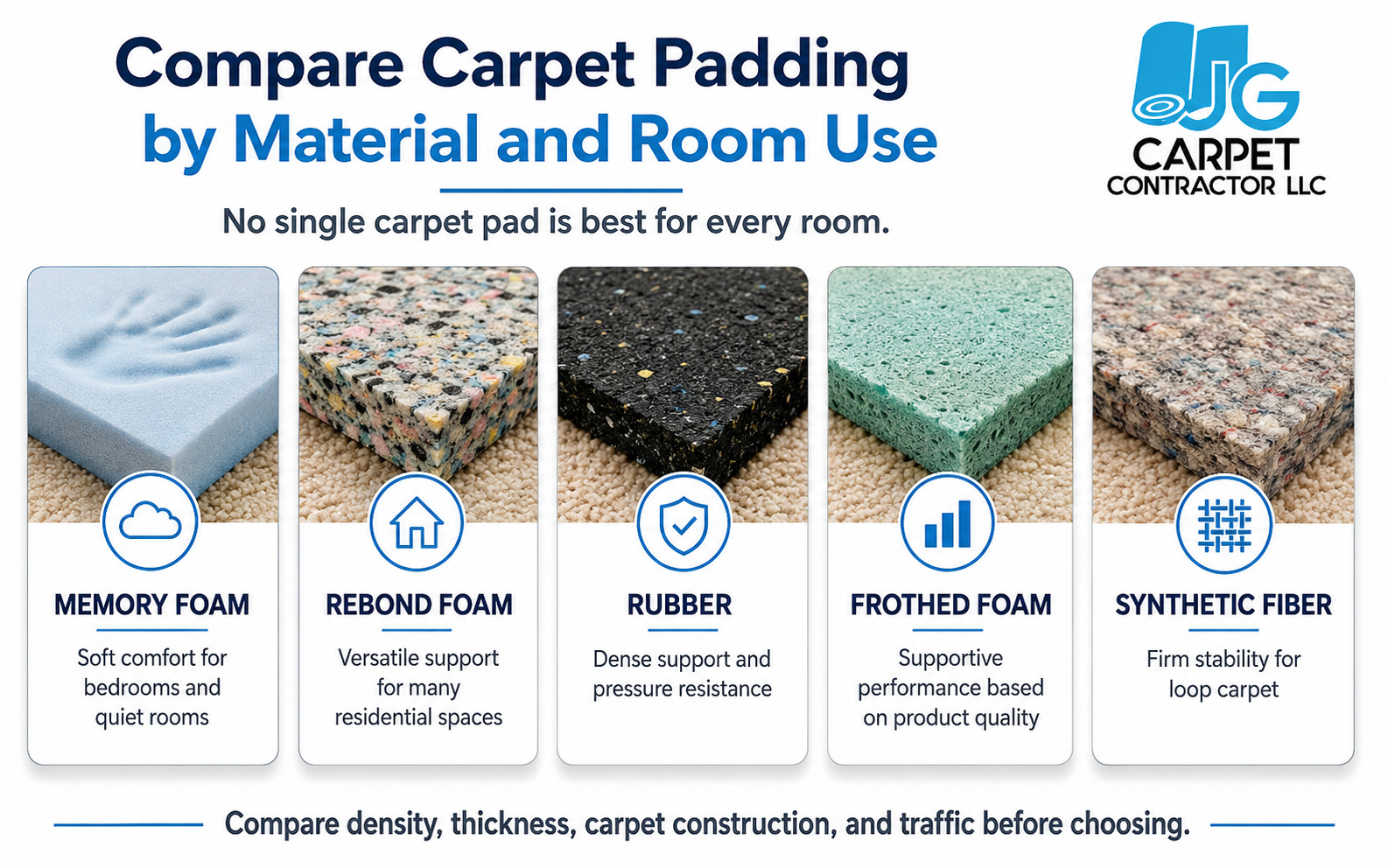
Carpet padding is the layer placed between the carpet and the floor underneath. It may also be called carpet pad, carpet cushion, or carpet underlayment. Although it stays hidden, it affects comfort, support, sound control, and carpet performance.
Good padding for carpet absorbs pressure from walking, reduces stress on carpet fibers, and helps the carpet feel better underfoot. Bedrooms and living rooms may benefit from more cushioning, while stairs, hallways, and entrances usually need firmer support.
Key Takeaway
Carpet padding should match the carpet style, room traffic, comfort goals, and support needs.
What Is Carpet Padding Made Of?
Before choosing a pad, it helps to know what carpet padding is made of. Common materials include foam, rubber, recycled foam, felt, synthetic fibers, and natural fibers.
Common Carpet Padding Materials
- Rebond foam: Made from recycled foam pieces and widely used in homes.
- Memory foam: Soft and cushioned for comfort-focused rooms.
- Rubber padding: Dense, supportive, and useful where durability matters.
- Fiber padding: Firm support for carpet styles that do not need deep cushioning.
- Natural fiber padding: May fit specialty carpets when recommended by the manufacturer.
How Thick Should Carpet Padding Be?
Thicker padding is not always better. Thickness and density should match the carpet type, room traffic, and manufacturer requirements. Many residential carpet pads are around 1/2 inch thick or less, while Berber and loop carpets may need thinner, firmer padding.
Padding Thickness by Room Type
| Room or Carpet Type | Padding Priority | Why It Matters |
|---|---|---|
| Bedrooms | Comfort with support | Softness matters, but the carpet still needs stability. |
| Hallways | Firm, dense padding | Busy areas need support that resists compression. |
| Berber carpet | Thinner, firmer padding | Loop carpets need stable support. |
| Stairs | Firm padding | Stability matters because stairs receive focused pressure. |
| Pet areas | Durable, moisture-conscious padding | Accidents and movement can affect the flooring system. |
Key Takeaway
Density is just as important as thickness. Do not choose carpet padding only because it feels soft.
Compare Different Types of Carpet Padding
No single carpet pad works best in every room. Compare comfort, traffic, moisture exposure, furniture, carpet style, and long-term support before choosing.
Carpet Padding Types Comparison
| Padding Type | Best For | Important Note |
|---|---|---|
| Memory foam | Bedrooms and quiet rooms | May be too soft for stairs or heavy traffic. |
| Rebond foam | Many residential rooms | Density affects long-term support. |
| Rubber padding | Durability and pressure resistance | Can cost more than foam options. |
| Frothed foam | Supportive installations | Performance depends on product quality. |
| Synthetic fiber | Loop carpets and firm support | Less soft but often more stable. |
Best Carpet Padding for Stairs
Types carpet padding for stairs should focus on firmness and stability. Stairs receive concentrated pressure because people step on narrow areas repeatedly.
- Choose firm density to keep carpet stable.
- Avoid padding that is too thick or soft.
- Use durable materials for frequent traffic.
- Check manufacturer requirements before installation.
Best Carpet Padding for Pets
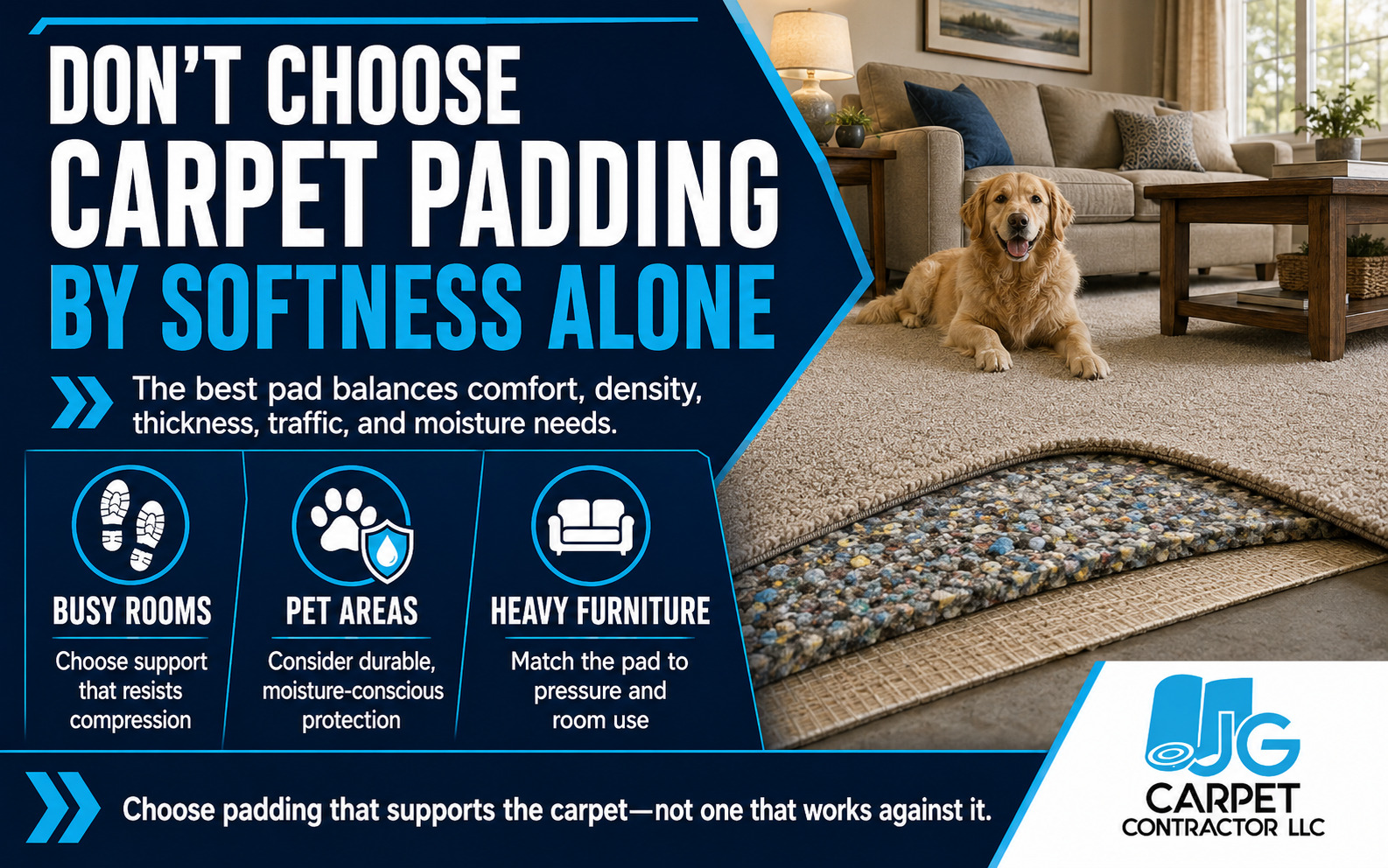
Types carpet padding for pets should balance comfort, durability, and moisture protection. Homes with dogs or cats may deal with accidents, dirt, spills, and repeated movement across the carpet.
A moisture-resistant barrier can help limit how far liquid moves beneath the carpet. Dense rebond or quality foam can provide support, while some rubber padding may add moisture resistance.
Key Takeaway
Stairs need firm support, while pet-friendly rooms need durable padding with moisture-conscious protection.
How to Choose Carpet Padding
Learning how to choose carpet padding starts with the room. A bedroom may need softer cushioning, while stairs and hallways usually need stronger support. Pet-friendly rooms may need moisture protection, and family rooms often need a balance of comfort and durability.
Carpet Padding Decision Checklist
- Check carpet manufacturer requirements.
- Review room traffic level.
- Compare density and thickness.
- Consider pets, spills, or moisture.
- Think about furniture weight.
- Match padding to carpet construction.
- Choose comfort without ignoring support.
What Is the Best Carpet Padding?
There is no single best carpet pad for every space. Memory foam may suit a quiet bedroom, dense rebond padding may fit an active living area, and rubber padding may work well where strong support or moisture resistance matters.
The best carpet padding should support the carpet instead of working against it. By comparing material, thickness, density, room demands, and installation needs, you can create a stronger foundation for your flooring.
If you need professional assistance choosing or installing your flooring, experienced Carpet Contractors can help you compare materials and select an option suited to your property. You can also review more about choosing the right fiber carpet type.
Get Help Choosing Carpet Padding
Choosing carpet padding is easier when you compare the room, traffic level, carpet style, comfort goals, and installation requirements together.
For help from a licensed team with more than 20 years of experience, contact us Monday through Saturday from 7:00 am to 5:00 pm. Free estimates are available, and our License number is #05-148920. Schedule carpet padding estimate.
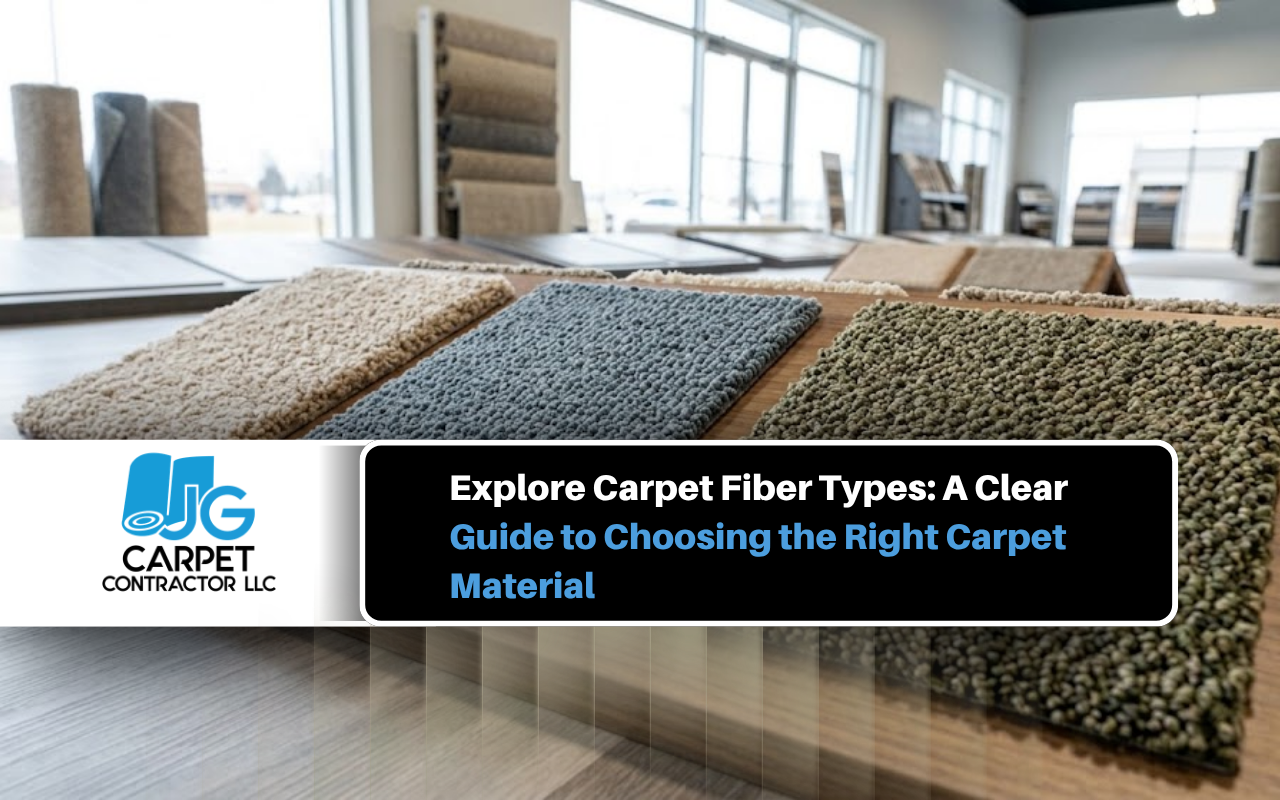
Understanding Carpet fiber types makes it easier to choose flooring that matches the way a room is used. Carpet may look simple from the surface, but the fiber beneath its color, texture, and softness plays a major role in comfort, durability, cleaning, and appearance.
Request carpet help before choosing materials for your space.
Different types of carpet fibers respond differently to foot traffic, spills, sunlight, moisture, and daily wear. That is why choosing the right material matters for both homes and workplaces.
Before selecting carpet, compare two main factors: the fiber material and the pile construction. Carpet fibers may be natural or synthetic, while pile describes how the fibers are attached to the backing.
Understand Natural and Synthetic Carpet Fibers
Natural carpet fibers come from materials found in nature. Wool is one of the best-known examples. Natural fibers are often valued for softness, texture, and premium appearance, although they can cost more and may require more careful maintenance.
Synthetic carpet fibers are manufactured materials. Nylon, polyester, olefin, and acrylic all fall into this category. Synthetic fibers are often practical because many varieties offer good stain resistance, durability, moisture resistance, or easier maintenance.
Key Takeaway
Neither natural nor synthetic carpet is best for every room. The right choice depends on traffic, moisture, comfort, cleaning needs, budget, and appearance.
Compare the Main Types of Carpet Material
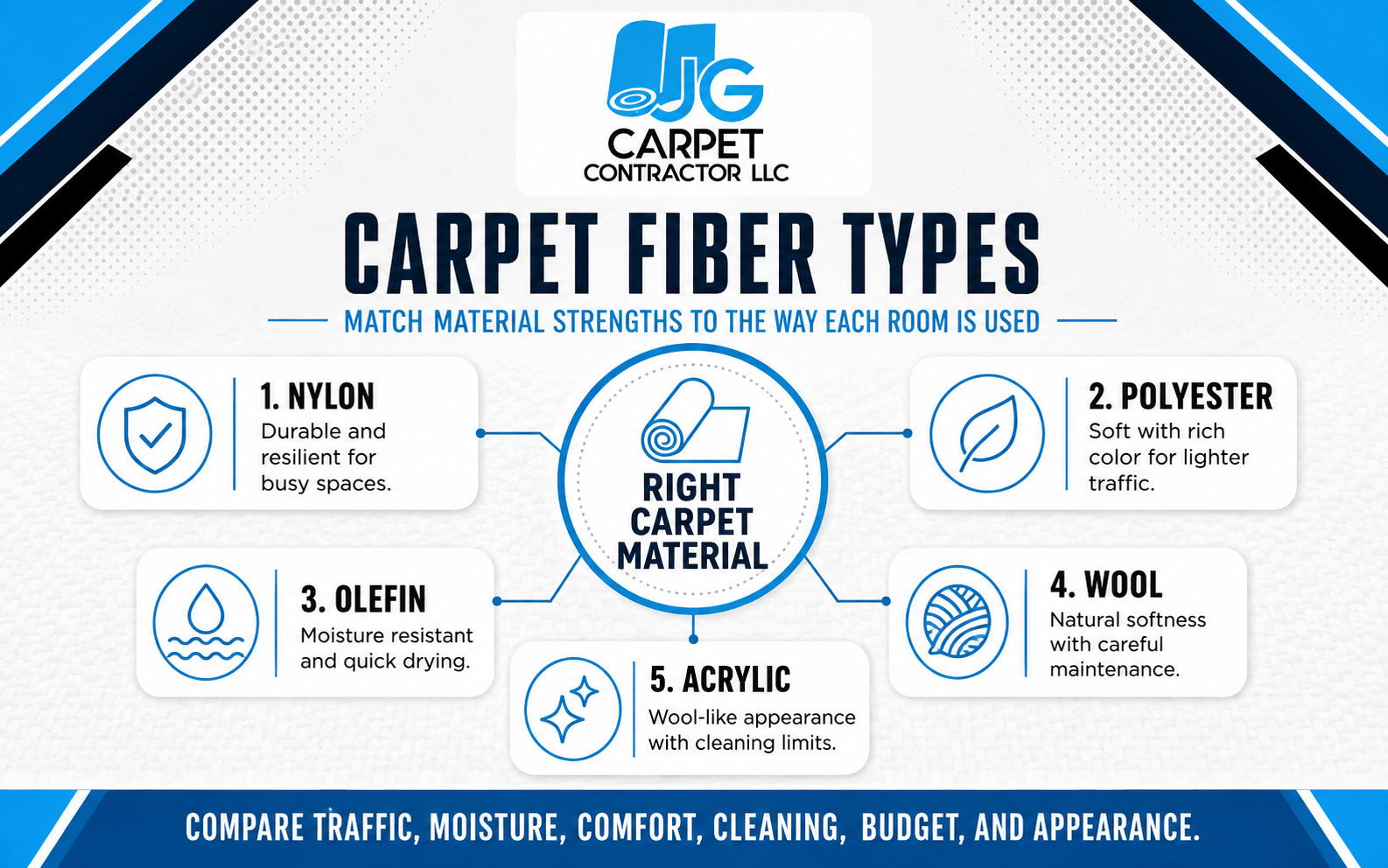
The most common carpet materials include nylon, polyester, olefin, wool, and acrylic. Each fiber has its own texture, strength, stain resistance, moisture performance, and ability to maintain its shape.
Nylon is often selected for busy spaces because it handles regular foot traffic well. Polyester is known for softness and rich colors. Olefin performs well where moisture resistance matters, while wool provides a natural, luxurious feel.
Carpet Fiber Comparison
| Carpet Material | Main Strength | Important Consideration | Good Uses |
|---|---|---|---|
| Nylon | Resilience and durability | Usually costs more than some synthetics | Hallways, stairs, offices, family rooms |
| Polyester | Softness and rich color | May flatten under heavy traffic | Bedrooms, guest rooms, lower-traffic spaces |
| Olefin | Moisture resistance | Can retain oily dirt | Basements, work areas, covered spaces |
| Wool | Natural softness and appearance | Requires careful cleaning | Bedrooms, living rooms, dry spaces |
| Acrylic | Wool-like appearance | Sensitive to some cleaning chemicals | Selected lower-traffic indoor areas |
Choose Nylon Carpet for Busy Areas
Nylon carpet is one of the strongest synthetic options, making it suitable for hallways, stairs, family rooms, offices, and other high-use areas.
The fiber has good resilience, which means it can recover its shape after being pressed by footsteps or furniture. This ability helps nylon maintain a neat appearance over time.
Nylon Carpet Benefits
- Handles regular foot traffic well
- Resists wear
- Offers good resistance to mold and mildew
- Accepts many dyes and colors
- Maintains its appearance well with routine care
Key Takeaway
Nylon is a strong choice when durability, resilience, and long-term appearance matter more than maximum softness.
Use Polyester Carpet for Softness and Color
Polyester is popular when softness, color, and comfort are important. The fiber can hold bright, vibrant colors well and usually provides a smooth feel underfoot.
Polyester also resists many water-based stains because it does not absorb moisture easily. However, it may flatten faster than nylon when exposed to constant foot traffic or heavy furniture.
Best Places for Polyester Carpet
- Bedrooms
- Guest rooms
- Lower-traffic living areas
- Spaces where softness is a priority
Polyester can be more difficult to clean when exposed to oily stains, so spills should be addressed quickly. Some PET polyester carpets are also made with recycled plastic materials, including bottles.
Consider Olefin for Moisture-Prone Areas
Olefin, also called polypropylene, is a synthetic carpet fiber valued for moisture resistance and practical maintenance. Because it absorbs very little water, olefin may work well in basements, covered outdoor spaces, work areas, and some commercial environments.
Olefin is also common in loop-style carpets. Its fibers can resemble the appearance of wool, which has made it an affordable synthetic alternative in some carpet styles.
Olefin Carpet Advantages
- Good moisture resistance
- Resistance to many stains
- Quick drying
- Easy routine cleaning
- Affordable pricing compared with many premium materials
Key Takeaway
Polyester works well for softness and color, while olefin is better when moisture resistance and practical cleaning matter most.
Choose Wool for Natural Comfort
Wool offers a noticeably different experience from synthetic carpet fibers. As a natural material, wool has a warm, dense, and soft texture.
Wool is often considered a premium carpet material because of its comfort and natural finish. Higher-quality wool can be expensive, while lower grades may offer less stain resistance.
Best Places for Wool Carpet
- Bedrooms
- Living rooms
- Sitting areas
- Lower-moisture spaces
Wool requires careful maintenance. Excessive moisture and harsh cleaning products can damage the fibers, so regular vacuuming and quick spill cleanup are important.
Review Acrylic as a Wool-Like Synthetic Fiber
Acrylic is sometimes described as a synthetic alternative to wool because it can provide a similar look and texture at a lower cost.
Acrylic Carpet Characteristics
- Resists static electricity
- Handles moisture better than some natural fibers
- Resists mold and mildew
- Resists many stains
- Offers good fade resistance
Cleaning products should be selected carefully. Certain alkaline chemicals can discolor acrylic fibers and may cause them to develop a brownish appearance over time.
Key Takeaway
Wool offers natural comfort and a premium look, while acrylic can provide a similar appearance with different maintenance limits.
Use Carpet Fiber Types With Pictures to Compare Texture
Looking at carpet fiber types with pictures can make differences in texture, shine, density, and pile easier to understand.
Nylon often has a smooth, even surface, while polyester may appear slightly shinier and show deeper colors. Olefin often has a practical look and commonly appears in loop-style carpet. Wool usually has a dense, natural surface with less shine.
Helpful Picture Ideas for This Blog
- Close-up image of nylon carpet in a hallway
- Soft polyester carpet in a bedroom
- Loop-style olefin carpet in a basement or office
- Natural wool carpet in a living room
- Side-by-side cut pile and loop pile carpet samples
Pictures are a useful starting point, but an actual carpet sample gives a better sense of softness, firmness, density, and comfort.
Understand Loop Pile and Cut Pile Carpet
Loop pile carpet leaves the yarn loops intact on the carpet surface instead of cutting them. Berber carpet is a familiar example of this construction.
Loop Pile Benefits
- Durability
- Simple maintenance
- Resistance to visible footprints
- Ability to hide vacuum marks
- Strong performance in high-traffic spaces
Cut pile is created by cutting the exposed yarn loops, leaving individual fiber ends on the carpet surface. This construction usually creates a softer texture than loop pile.
Some cut pile carpets show footprints and vacuum marks more clearly. Durability also depends on fiber material, density, twist, and construction quality.
Key Takeaway
Fiber material affects durability and cleaning, while pile style affects texture, comfort, footprints, and surface appearance.
Select Office Carpet Fiber Types Carefully
Office carpet requires special attention to durability because workplace flooring may receive steady traffic from employees, customers, rolling chairs, and furniture.
Nylon is often a practical choice because its fibers recover well from repeated pressure. Olefin may also suit selected office areas, particularly when moisture resistance and loop construction are useful.
Office Carpet Selection Tips
- Use durable fibers in entrances and hallways.
- Choose low-pile carpet for easier vacuuming.
- Consider patterns or mixed tones to hide minor marks.
- Compare reception areas, meeting rooms, and private offices separately.
- Match carpet material to traffic, cleaning needs, and furniture use.
Match Carpet Fibers to Each Room
Choosing carpet room by room can produce better results than installing the same material throughout an entire property.
Room-by-Room Carpet Material Guide
- Hallways and stairs: Nylon can handle repeated use and recover well from foot traffic.
- Bedrooms and guest rooms: Polyester may provide softness and color in spaces with lighter traffic.
- Living rooms: Nylon can work well for active households, while wool may suit homeowners who want natural texture.
- Basements: Olefin may be useful where moisture resistance is an important consideration.
- Offices: Low-pile nylon and durable loop carpets can support regular traffic and simpler maintenance.
Key Takeaway
Office and home carpet choices should match traffic, moisture, furniture, cleaning routines, pets, children, and comfort expectations.
Choose the Right Carpet Fiber and Pile
The best carpet is not determined by one feature alone. Fiber affects durability, softness, stain resistance, moisture performance, appearance, and maintenance.
Pile construction affects texture, comfort, visibility of footprints, and how the surface responds to everyday use.
Before Choosing Carpet, Compare
- How much traffic the room receives
- Whether moisture or spills are common
- How soft you want the flooring to feel
- How often you are willing to clean and maintain it
- Whether pets or children use the room
- Your preferred color and texture
- Your flooring budget
Now that you understand the most common fibers and pile styles, you can compare your options with greater confidence. If you still need help deciding which carpet material or construction works best for your space, call us. We can help you review your options and choose flooring that fits your needs.
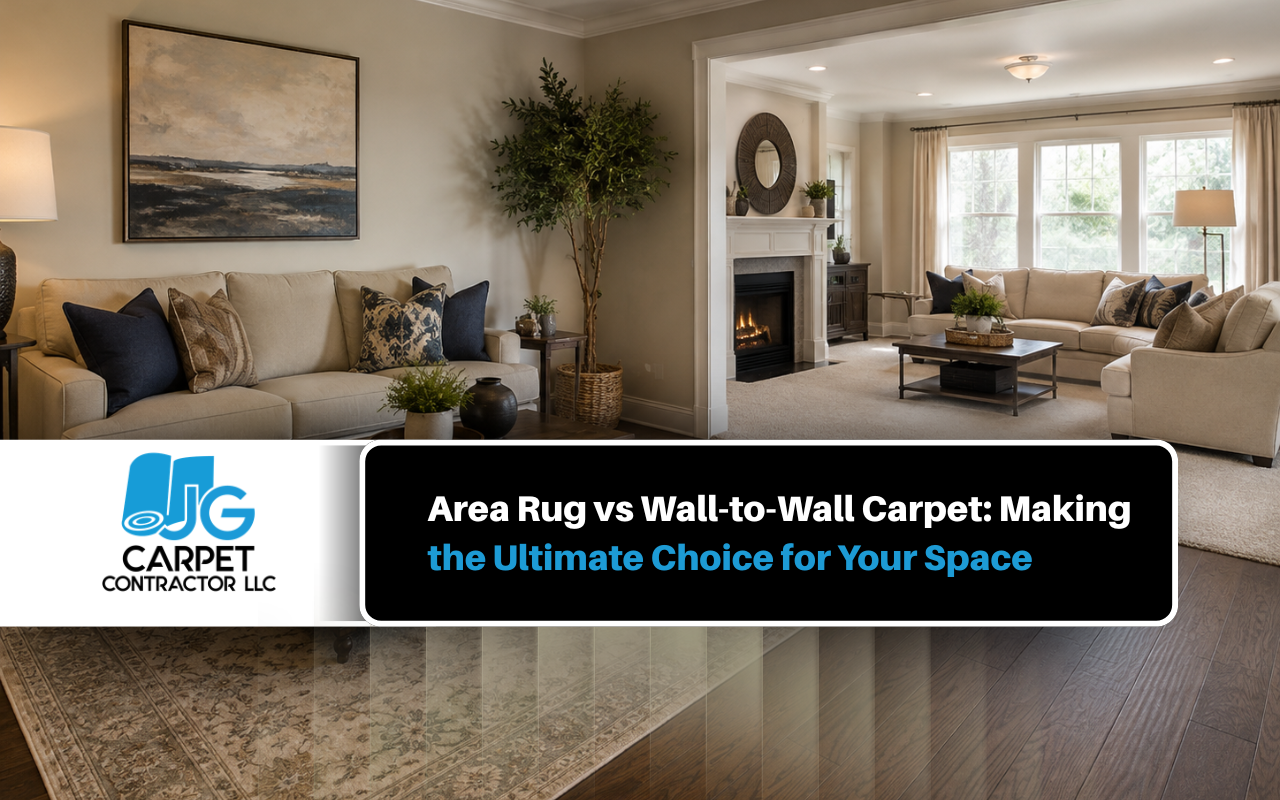
Choosing between an area rug and full carpet affects comfort, style, care, and how you use each room. This area rug vs wall-to-wall carpet guide explains the main differences so you can make a practical decision for your home.
At JG Carpet Contractors LLC, we help homeowners understand their flooring options before they commit. You can also explore our carpet options in Maryland as you compare materials, textures, and room needs.
Area Rugs and Carpet Serve Different Needs
An area rug covers one part of a floor while leaving the surrounding surface visible. It can define a seating area, add softness, or introduce color without changing the entire room. Rugs are also easy to move when you rearrange furniture or update your décor.
Wall-to-wall carpet covers the full floor from one edge of the room to the other. It creates a consistent surface and adds softness across the entire space. Carpet may be a better fit when you want warmth, quieter rooms, and comfortable flooring in every corner.
Area Rug vs Carpet Pros and Cons
The best option depends on your lifestyle and the purpose of the room. When you compare area rug vs carpet pros and cons, consider flexibility, coverage, maintenance, and the flooring already in place.
- Area rugs are easy to move, replace, and use in selected zones.
- Rugs allow hardwood, tile, or other flooring to remain visible.
- Wall-to-wall carpet creates steady comfort across the whole room.
- Installed carpet can reduce noise and make bedrooms feel warmer.
- Rugs may shift without a suitable pad or non-slip backing.
- Full carpet requires more planning and professional installation.
With JG Carpet Contractors LLC, you can compare these differences with your room layout in mind. A practical choice should support how you walk, relax, clean, and arrange furniture every day.
When Should You Use an Area Rug?
Understanding when to use an area rug instead of carpet starts with the existing floor. A rug works well when you want to protect part of a hardwood or tile surface while keeping most of the original flooring visible.
Area rugs can also separate spaces in open floor plans. One rug may define a living area, while another creates a clear dining zone. They are useful for renters, changing décor, and rooms where permanent floor covering is not needed.
Full carpet may be more suitable for bedrooms, family rooms, and other spaces where consistent softness matters. It also removes gaps between separate floor coverings and creates a unified appearance throughout the room.
Cost and Installation Factors to Compare
The area rug cost vs carpet installation cost cannot be judged by the material alone. Rug size, fiber, construction, padding, room measurements, and floor preparation can all affect the final decision. We do not recommend choosing based only on the lowest initial expense.
- Measure the complete room and the area you want to cover.
- Check whether the current floor needs preparation or repairs.
- Consider the need for rug pads or carpet padding.
- Think about cleaning, replacement, and long-term room use.
- Compare partial coverage with complete professional installation.
Our team at JG Carpet Contractors LLC can review the space before installation begins. Accurate measurements and suitable preparation can help the new carpet fit correctly and perform well during regular use.
Comfort, Care, and Daily Room Use
Area rugs create softness in selected locations, such as under a bed, dining table, or living room seating area. The uncovered floor remains easy to access, but the rug may need regular adjustment and separate cleaning based on its material.
Wall-to-wall carpet provides an even surface throughout the room. Routine vacuuming helps remove everyday dirt, while prompt cleaning can prevent spills from becoming harder to manage. High-traffic areas may require more attention than spaces with limited foot traffic.
The area rug vs wall-to-wall carpet decision should also reflect children, pets, furniture placement, and daily movement. A rug gives you targeted comfort, while carpet provides continuous coverage without exposed floor sections between furniture.
Choosing the Right Option for Maryland Homes
Room function is one of the clearest ways to narrow your choices. Before selecting an area rug or arranging a carpet installation service in Maryland, review how each space is used and what type of comfort you expect.
- Choose an area rug for flexible layouts and visible hard flooring.
- Consider carpet for bedrooms that need softness from wall to wall.
- Use rugs to define zones in open living and dining spaces.
- Consider carpet where steady coverage and sound control are priorities.
- Review doors, stairs, transitions, and furniture before installation.
When you choose JG Carpet Contractors LLC, we consider the room rather than recommending one solution for every home. The right flooring should support the space, your design preferences, and the way your household uses the room.
Frequently Asked Questions
Is an area rug easier to replace than carpet?
Yes. An area rug can usually be removed or replaced without changing the entire floor. Full carpet requires measurements, removal work, preparation, and installation. Homeowners considering permanent coverage can review our professional carpet installation service.
Can I place an area rug over existing carpet?
You can place a rug over carpet to add color or define part of a room. However, the rug may move or bunch depending on the carpet texture. A suitable pad can improve stability and help protect both surfaces.
Which option works better in a bedroom?
Both options can work. An area rug adds softness near the bed while keeping the main floor visible. Wall-to-wall carpet creates complete coverage and a consistent feel. You can compare materials through our Maryland carpet selection.
Does wall-to-wall carpet require professional installation?
Professional installation is recommended because carpet must be measured, cut, stretched, and secured correctly. Proper padding and floor preparation also matter. Our carpet installation services in Maryland explain how we support this process.
Should I choose flooring before selecting a rug?
It is often helpful to choose the main floor first. The rug can then complement its color, texture, and room function. A flooring store in Maryland can help you compare the surfaces that will remain underneath or around the rug.
Plan the Best Flooring Choice for Your Space
Your final area rug vs wall-to-wall carpet choice should balance comfort, flexibility, care, and room coverage. Think about whether you want a movable design feature or a permanent surface that reaches every wall. The best choice is the one that supports your daily routine.
At JG Carpet Contractors LLC, we can help you evaluate your room and prepare for a suitable carpet installation. Visit our flooring project contact page to discuss your space and the type of coverage you are considering.

A productive home office starts with more than a desk and chair. The floor affects comfort, sound, cleaning, chair movement, and the overall feel of the room. At JG Carpet Contractors LLC, we help homeowners compare practical options that fit the way they work each day.
This guide explains how to choose the best flooring for home office use without making the process feel complicated. You can also explore our flooring options in Maryland as you narrow down the right material for your space.
Match Flooring to Your Daily Work Habits
The right floor depends on how you use your office. A room used for video calls may need better sound control. A space with a rolling chair needs a smooth, durable surface. A standing desk area may benefit from flooring with a little more comfort underfoot.
Also think about pets, sunlight, spills, and how often you want to clean. The best flooring for home office use should support your routine, not create extra work. With JG Carpet Contractors LLC, you can compare materials based on your room, furniture, and daily needs.
Carpet or Hardwood for Your Workspace?
The carpet vs hardwood for home office decision often comes down to comfort, sound, and appearance. Carpet feels soft, helps reduce echoes, and creates a warm setting. It can be a strong choice for private offices where quiet work and comfort matter most.
Hardwood creates a clean, polished look and works well with rolling office chairs. It is also easier to sweep and can suit both modern and traditional rooms. Our hardwood flooring installation and repair services can help you understand whether wood fits your office layout.
Quiet Flooring Options for Focused Workdays
Noise-reducing flooring for work from home spaces can make calls clearer and reduce everyday distractions. Soft surfaces usually absorb more sound, while hard surfaces may need rugs or underlayment to control echoes.
- Carpet helps soften footsteps, chair movement, and room echo.
- Cork has a naturally softer feel and can support a quieter space.
- Vinyl with a suitable underlayment may reduce sound while staying easy to clean.
- Engineered wood can work well when paired with sound-control materials below it.
Our team at JG Carpet Contractors LLC can help you compare these options based on the rooms above, below, and beside your office.
Comfortable Surfaces for Standing Desk Setups
Ergonomic flooring for standing desks should feel stable without being overly hard. Carpet, cork, and cushioned vinyl can reduce the harsh feel of long standing periods. A supportive anti-fatigue mat can also improve comfort on hardwood, laminate, tile, or vinyl.
Floor thickness and softness matter because a chair still needs to roll safely. Too much cushion may make movement difficult. A balanced surface gives you comfort while keeping the desk, chair, and storage units steady.
Durable Choices for Easy Office Maintenance
Home offices often include rolling chairs, cables, coffee, and daily foot traffic. A practical floor should be easy to care for and strong enough for regular use. The best flooring for home office settings also needs to fit the amount of maintenance you are comfortable doing.
- Vinyl resists everyday spills and comes in many wood-look designs.
- Laminate gives a smooth surface and handles routine cleaning well.
- Hardwood offers lasting visual appeal but needs protection from scratches and moisture.
- Carpet adds comfort but benefits from regular vacuuming and quick spill cleanup.
For a surface that combines easy care with design flexibility, review our vinyl floor installation options.
Maryland Installation Factors to Plan Ahead
Home office flooring installation in Maryland should begin with a close look at the subfloor, room moisture, doorway height, and furniture placement. These details can affect how the finished floor looks and performs.
- Measure the room and note closets, doors, and built-in furniture.
- Check whether the existing floor must be removed first.
- Choose a material that suits the room’s moisture and temperature changes.
- Plan where desks, chairs, and cable routes will sit after installation.
- Allow space for the installer to move materials and tools safely.
When you choose JG Carpet Contractors LLC, we can review the room and explain the next steps before work begins. For a softer office surface, our professional carpet installation services may be a suitable place to start.
Frequently Asked Questions
What is the best flooring for a small home office?
The best choice depends on noise, chair movement, and cleaning needs. Carpet can make a small room feel quieter, while vinyl or laminate can make it easier to move a rolling chair. Our Maryland flooring selection can help you compare suitable options.
Is carpet better than hardwood for video calls?
Carpet usually absorbs more sound, so it may reduce echoes during calls. Hardwood can still work well with an area rug, curtains, and other soft items. You can review our carpet installation service for a quieter office setup.
Can a rolling chair damage home office flooring?
Yes, repeated chair movement can mark some surfaces over time. A chair mat, softer casters, and regular cleaning can help protect the floor. The right solution depends on whether you choose carpet, hardwood, vinyl, or laminate.
Which floor works well with a standing desk?
Cork, carpet, and cushioned vinyl can feel more comfortable underfoot. Hard surfaces can also work when paired with an anti-fatigue mat. Our vinyl flooring options may suit offices that need both comfort and easy care.
How should I prepare for flooring installation?
Remove small items, clear the work area, and plan where office furniture will go afterward. Also note any floor damage, moisture concerns, or tight door clearances. Discussing these details before installation can help the project move more smoothly.
Choose a Floor That Supports Better Work
The best flooring for home office use should make your space quieter, more comfortable, and easier to maintain. Focus on how you work, how the room feels, and which surface fits your furniture and daily routine.
With JG Carpet Contractors LLC, you can move from comparison to a clear flooring plan. Browse our home office flooring options in Maryland or contact our team about your office project.
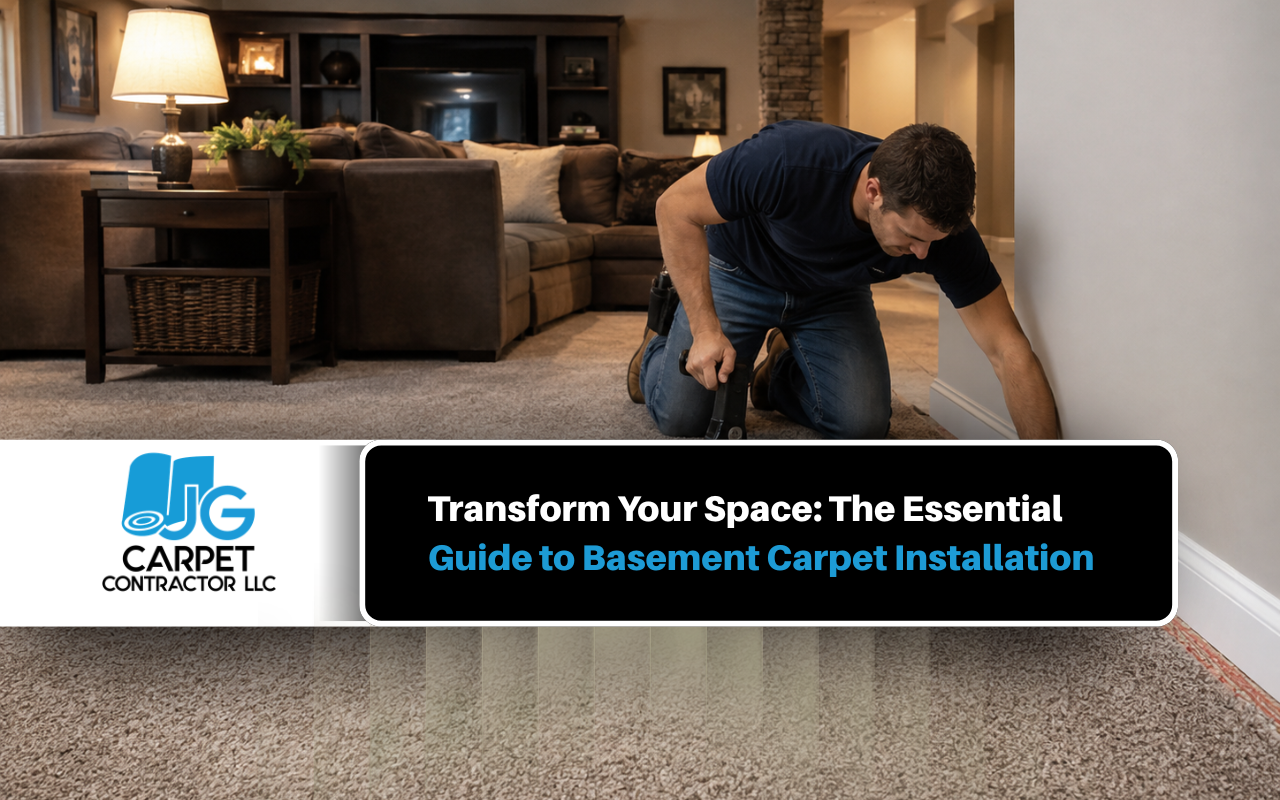
A finished basement can become a warm family room, play area, home office, or quiet retreat. The right professional carpet installation can add softness, reduce noise, and make the space feel more inviting.
However, basement carpet installation requires careful planning. Moisture, the concrete floor, carpet fibers, and underlay all affect the final result. At JG Carpet Contractors LLC, we focus on practical flooring choices that fit the room and its conditions.
Choosing Basement Carpet That Handles Daily Use
The best carpet type for below-grade rooms usually contains synthetic fibers. These materials absorb less moisture than many natural fibers and are easier to maintain. The right choice also depends on foot traffic, room use, comfort, and the condition of the basement.
- Nylon is durable and suitable for busy family spaces.
- Polyester feels soft and offers useful stain resistance.
- Olefin absorbs little moisture and works well in lower-level rooms.
- Low-pile carpet is easier to clean and less likely to hold dirt.
- Loop-pile styles can hide wear in active areas.
Carpet color also changes how a basement feels. Light shades can make a small room appear brighter. Medium tones, flecks, and simple patterns can help hide everyday dirt between cleanings.
Is Carpet Good for Basements?
Many homeowners ask, “Is carpet good for basements?” It can be a comfortable option when the basement stays dry and receives proper preparation. Carpet adds warmth over concrete, softens footsteps, and can make the room feel connected to the rest of the home.
Carpet should not cover an active water problem. Leaks, standing water, wall seepage, and ongoing condensation need attention before installation. A dry foundation allows the carpet, underlay, and flooring system to perform more effectively.
With JG Carpet Contractors LLC, homeowners can discuss the planned use of the room before choosing materials. A guest room may need a softer surface, while a busy recreation area may benefit from a denser, lower-pile carpet.
Moisture Control Before Carpet Goes Down
Moisture-resistant carpet for basements is only one part of a dependable flooring plan. The room itself should also have controlled humidity and a dry concrete slab. Check the floor, walls, corners, and areas near plumbing for signs of dampness.
- Look for discoloration, musty smells, peeling paint, or visible mold.
- Repair known leaks and seal appropriate cracks before flooring work begins.
- Test the concrete slab for possible moisture movement.
- Use ventilation or a dehumidifier when the room feels humid.
- Choose underlay and flooring materials rated for below-grade spaces.
A moisture barrier may be useful in some basements, but the correct system depends on the slab and flooring materials. Our team at JG Carpet Contractors LLC can review the installation area and explain practical preparation needs without covering unresolved moisture damage.
Preparing the Concrete Floor and Underlay
A clean and level subfloor supports a smoother carpet surface. Dust, old adhesive, loose flooring, and debris should be removed. Cracks and uneven areas may also need attention so they do not create visible bumps, movement, or early wear.
The underlay provides cushioning and can improve warmth and sound control. Basement products should be compatible with concrete and the selected carpet. High-density options often provide better support than very soft padding that compresses quickly.
Homeowners comparing carpet with another lower-level flooring option can also review our basement vinyl flooring information. Vinyl may suit rooms where moisture exposure makes carpet less practical.
Professional Installation for Maryland Basement Rooms
Carpet installation Maryland basement projects may involve concrete fastening, room transitions, seams, stairs, and unusual wall shapes. Accurate measurements help reduce waste and allow the carpet pattern or pile direction to remain consistent throughout the space.
Professional installers stretch the carpet with suitable tools to reduce wrinkles and loose areas. They also secure edges, join seams, and finish transitions near doors or other flooring. These details support a cleaner appearance and safer walking surface.
When you choose JG Carpet Contractors LLC, we consider the room layout, subfloor, access points, and intended use before work begins. Homeowners near Baltimore can explore our carpet installation services in Baltimore for additional local information.
Caring for Carpet in Below-Grade Rooms
Routine care helps basement carpet stay clean and comfortable. Lower levels can collect dust from utility areas, storage rooms, exterior doors, and limited airflow. Regular cleaning also makes it easier to notice damp areas or stains before they spread.
- Vacuum active areas regularly to remove grit from the fibers.
- Blot spills instead of rubbing them deeper into the carpet.
- Use cleaning products recommended for the carpet material.
- Keep furniture and stored items away from damp walls.
- Monitor humidity during warm or rainy seasons.
After basement carpet installation, avoid allowing wet items to remain on the floor. Check around windows, pipes, appliances, and foundation walls from time to time. Early action can protect the carpet and the room beneath it.
Frequently Asked Questions
What carpet fiber works best in a basement?
Synthetic fibers such as nylon, polyester, and olefin are common choices because they are durable and absorb less moisture than many natural materials. Our carpet installation team can help compare options based on traffic and room use.
Can carpet be installed directly over concrete?
Carpet can be installed over a properly prepared concrete slab, but it normally requires a suitable installation system and underlay. The slab should be clean, level, and free from active moisture problems before the work starts.
Should I choose carpet or vinyl for my basement?
Carpet provides warmth and softness, while vinyl may be better for areas with higher moisture exposure. Reviewing our basement vinyl flooring options can help you compare both surfaces.
How should basement carpet be cleaned?
Vacuum regularly, address spills quickly, and follow the carpet maker’s cleaning guidance. Avoid soaking the carpet during cleaning because excess water may take longer to dry in a below-grade room.
Do Baltimore basements need special preparation?
Every basement has different conditions, but local humidity, concrete moisture, and room ventilation should be considered. Our Baltimore carpet installation information explains how homeowners can begin planning their project.
Plan a Warmer, More Comfortable Basement
A successful basement carpet installation begins with a dry room, suitable carpet fibers, supportive underlay, and careful installation. These choices can turn an unfinished or rarely used lower level into a more comfortable part of the home.
At JG Carpet Contractors LLC, we help homeowners consider the practical details before selecting basement flooring. Visit our contact page to discuss your basement carpet needs and plan a surface that fits your space.

New carpet can make a room feel warmer, quieter, and more comfortable. Understanding the carpet installation cost in Maryland starts with reviewing the material, room size, preparation needs, and layout. Our carpet installation services can help you plan each part of the project.
At JG Carpet Contractors LLC, we guide customers through the choices that may affect their flooring quote. A clear review of the space helps you compare options and prepare a practical budget without relying on a general estimate.
What Shapes Carpet Pricing Across Maryland?
Several details affect how much does carpet installation cost for a specific property. Carpet type, padding, square footage, room shape, stairs, furniture, and floor preparation can all influence the amount of work involved.
The condition of the current floor also matters. Removing old material, correcting uneven areas, or preparing transitions between different floors may add time to the project. A local assessment gives you a clearer answer than a broad online estimate.
Carpet Materials and Their Cost Impact
The carpet you select affects comfort, appearance, care needs, and the final quote. Our team at JG Carpet Contractors LLC can explain suitable choices based on the way each room is used.
- Nylon is often considered for busy rooms because it handles regular foot traffic well.
- Polyester can provide a soft feel and a wide range of colors.
- Olefin may suit spaces where moisture resistance is an important concern.
- Wool is a natural option with a distinct texture and appearance.
- Carpet padding can affect softness, support, and long-term performance.
When comparing carpet cost per square foot installed, review what the quote includes. Carpet, padding, preparation, removal, transitions, and labor may be listed together or as separate project items.
Room Size, Layout, and Measuring Needs
The average cost to carpet a room depends heavily on its measurements. A larger room needs more carpet and padding, while an irregular space may require extra cuts or seams. Closets, corners, doorways, and connected areas can also affect material use.
Accurate measuring helps reduce ordering problems and supports a more useful carpet installation cost in Maryland estimate. Our Maryland carpet store options can help you compare materials after the space has been reviewed.
Labor, Preparation, and Added Project Tasks
A professional installation quote may include more than placing carpet. With JG Carpet Contractors LLC, you can discuss the condition of the room and identify tasks that should be considered before work begins.
- Removing and disposing of the existing flooring
- Moving furniture before and after installation
- Preparing or cleaning the subfloor
- Installing new padding and tack strips
- Adding transitions near doors or other flooring
- Completing detailed cuts around stairs, closets, or built-in features
These details can change the labor needed for carpet installation in Baltimore and other Maryland service areas. Asking what is included makes it easier to compare quotes fairly.
Comparing Professional and DIY Installation
DIY installation may appear simple, but carpet must be measured, cut, joined, stretched, and secured correctly. Errors can create loose areas, visible seams, uneven edges, or wasted material.
Professional installation can reduce these risks and provide a cleaner result. Before choosing an approach, compare tool needs, preparation work, available time, and the difficulty of the room. The lowest starting expense may not provide the best overall value.
Planning a Carpet Budget With Confidence
A useful budget should cover the complete project rather than carpet alone. When you choose JG Carpet Contractors LLC, we can review the space and explain the work connected to your installation needs.
- Measure every room, closet, hallway, and connected area.
- Select carpet based on traffic, comfort, and care needs.
- Ask whether padding, removal, preparation, and transitions are included.
- Explain any stairs, unusual corners, or built-in features.
- Compare the full scope of each quote instead of one line item.
You can also review our carpet installation options before discussing the details of your property.
Frequently Asked Questions
How much does carpet installation cost for one room?
The answer depends on the room size, carpet type, padding, floor condition, and layout. A room assessment provides a clearer estimate than a general average. You can use our contact page to request an installation estimate.
What affects the average cost to carpet a room?
Square footage, carpet quality, padding, furniture, removal work, and subfloor preparation can affect the quote. Closets, stairs, narrow areas, and unusual room shapes may also require more material or labor.
Does carpet cost per square foot installed include padding?
Not every quote is structured the same way. Ask whether the amount includes carpet, padding, labor, removal, preparation, and transitions. Our carpet selection information can help you prepare for that discussion.
Is professional carpet installation worth considering?
Professional installation may help prevent loose carpet, uneven edges, visible seams, and material waste. It is especially useful for large rooms, stairs, connected spaces, or layouts that require detailed cutting and fitting.
How can I plan carpet installation in Maryland?
Begin with accurate measurements and a clear idea of how each room is used. Then compare materials and discuss preparation needs with an installer. For local project information, review our Baltimore carpet installation service.
Request a Clear Maryland Carpet Installation Quote
The carpet installation cost in Maryland should reflect your actual room, material choice, and preparation needs. A detailed quote can help you understand the full project before installation begins.
At JG Carpet Contractors LLC, we can review your flooring goals and discuss the next steps for your property. Request a carpet installation consultation to begin planning a comfortable and practical upgrade.
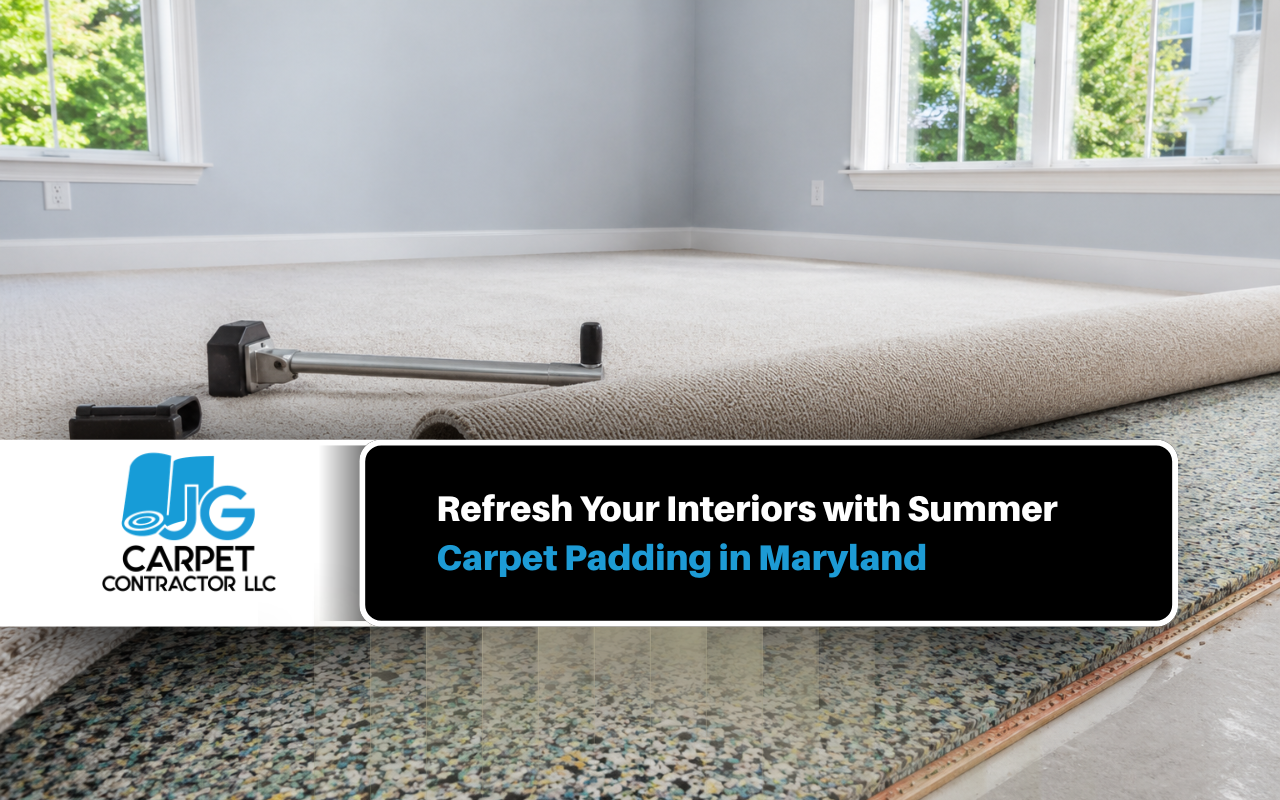
Summer brings bright light, warm rooms, and higher humidity. The right carpet pad can help your home feel cooler, softer, and fresher underfoot. At JG Carpet Contractors LLC, we guide homeowners through carpet padding types that fit seasonal comfort and daily use.
Choosing summer carpet padding in Maryland is about more than softness. It also means thinking about airflow, moisture control, and indoor air quality. A smart padding choice can support your carpet, protect your subfloor, and make each room feel more inviting during hot months.
Comfort That Fits Maryland Summer Homes
Warm weather can make some floors feel heavy or stale. A well-chosen carpet pad adds cushion without trapping too much heat. It supports the carpet fibers, reduces everyday wear, and gives your feet a softer surface after long days.
In family rooms, bedrooms, and hallways, comfort matters every time you walk across the floor. Summer carpet padding in Maryland can create a cleaner, calmer feel when it matches the room’s traffic level and your home’s moisture needs.
How Does Carpet Padding Handle Humidity?
Humidity can affect what happens below the carpet. If moisture gets trapped, the room may feel less fresh over time. Breathable padding helps air move below the carpet surface, which can reduce the damp feeling common in humid seasons.
With JG Carpet Contractors LLC, you can compare padding options based on comfort, room use, and moisture concerns. A better underlayment choice can help your carpet feel stable while supporting a fresher indoor space through summer.
Breathable Padding Options for Cooler Floors
Breathable padding is designed to allow more airflow than dense, closed materials. This can help the floor feel less warm, especially in rooms that get strong sunlight. It also supports comfort without making the carpet feel too soft or unstable.
- Open-cell foam can offer a softer feel for bedrooms and sitting areas.
- Rubber-style pads may add firm support for busy walkways.
- Ventilated designs can help reduce trapped heat below the carpet.
- Medium-density options often balance cushion, support, and airflow.
For rooms with steady foot traffic, it helps to review padding strength as well as comfort. You can explore more guidance for high-traffic carpet padding before deciding on one material for the whole home.
Mildew-Resistant Underlayment for Fresher Rooms
Mildew-resistant underlayment can be a smart choice in areas where humidity is a concern. It helps reduce the chance of moisture-related odors below the carpet. This is especially useful for rooms that stay closed, shaded, or less ventilated during summer.
This type of padding does not replace good home care, but it adds another layer of protection. Keeping spills under control, improving airflow, and selecting the right pad can all help your carpet stay fresher for longer.
Low-VOC Carpet Pads and Indoor Air
Low-VOC carpet pads are made to reduce chemical odors and support better indoor air. They can be a helpful choice for families, pets, and anyone who wants a cleaner feel inside the home. These pads pair well with fresh carpet and regular cleaning.
Our team at JG Carpet Contractors LLC can discuss low-VOC carpet pads when indoor comfort is a top concern. This choice can work well with breathable padding, especially in bedrooms, living rooms, and other spaces where people spend more time.
Room-by-Room Padding Choices That Make Sense
Each room has different needs. A guest bedroom may benefit from a soft pad, while a hallway may need firmer support. Choosing by room helps you avoid a one-size-fits-all result that feels too soft, too firm, or less practical.
- Bedrooms can feel calmer with soft, breathable padding.
- Living rooms often need comfort with steady support.
- Hallways usually need firmer padding for daily traffic.
- Home offices may benefit from stable padding under chairs.
- Basement-level rooms may need extra moisture awareness.
If you are comparing options, our guide to carpet padding materials can help you understand how each type may perform in different rooms.
Frequently Asked Questions
Is summer carpet padding in Maryland different from regular padding?
It can be. The main difference is the focus on airflow, moisture control, and indoor comfort during warmer months. Many homeowners look for breathable or mildew-resistant choices instead of standard padding.
What rooms benefit most from breathable padding?
Bedrooms, living rooms, and sunny spaces often benefit from breathable padding. It can help the floor feel more comfortable while still supporting the carpet. For material details, review our carpet padding comparison.
Can mildew-resistant underlayment stop all moisture problems?
No padding can stop every moisture issue. Mildew-resistant underlayment can help reduce risk below the carpet, but proper cleaning, ventilation, and fast spill care are still important for a fresher home.
Are low-VOC carpet pads worth considering?
Low-VOC carpet pads are worth considering when indoor air quality matters to your household. They can reduce strong odors from new flooring materials. You can also ask about low-VOC padding options for your home.
Should I replace carpet padding in one room or the whole house?
Both choices can work. A single room lets you test comfort first, while a full-home update gives a more consistent feel. When you choose JG Carpet Contractors LLC, we can help you decide based on room use and carpet condition. For busy spaces, see our padding guide for high-traffic rooms.
Plan a Cooler Carpet Upgrade This Summer
Summer carpet padding in Maryland can refresh your home without changing the whole design. The right pad can make rooms feel softer, quieter, and more comfortable through humid weather. A careful choice also supports the carpet above it.
- Choose breathable padding for better airflow underfoot.
- Consider mildew-resistant underlayment for humid rooms.
- Ask about low-VOC carpet pads for fresher indoor air.
- Match padding strength to each room’s traffic level.
At JG Carpet Contractors LLC, we can help you choose padding that fits your home, comfort goals, and seasonal needs. To plan your next flooring refresh, contact our carpet padding team and start with the rooms that need the most comfort.

Busy properties need floors that look warm, clean, and professional without slowing daily work. With the right product, finish, and care plan, hardwood flooring installation can support offices, hotels, retail spaces, and other active areas in Essex, Maryland.
At JG Carpet Contractors LLC, we help customers think through beauty, use, and upkeep before choosing High-Traffic Hardwood floors.
| Hardwood Flooring Benefit | Value for High-Traffic Spaces |
|---|---|
| Long-lasting durability | Helps the floor stand up to heavy daily use in commercial environments. |
| Professional appearance | Adds warmth, structure, and visual appeal to offices, hotels, and shared spaces. |
| Easy maintenance | Regular cleaning helps keep the floor looking clean and presentable. |
| Design flexibility | Different finishes and wood tones can match the style of the business. |
| Stronger property appeal | Quality hardwood flooring can make commercial interiors feel more refined and dependable. |
Best Hardwood Choices for Busy Essex Spaces
The best hardwood flooring for commercial spaces in Essex, Maryland depends on the room, traffic level, and daily cleaning needs. Harder wood species, quality finishes, and proper installation all help protect the surface from fast wear.
- Engineered hardwood can work well where moisture changes are a concern.
- Oak, maple, and hickory are common choices for active areas.
- Satin or matte finishes can hide small marks better than glossy finishes.
- Wide entry mats can reduce grit before it reaches the wood.
High-Traffic Hardwood floors should feel practical, not delicate. When the floor matches the way people use the space, it can keep its clean look with less stress.
Why Do Busy Properties Need Durable Floors?
Durable flooring for office buildings matters because first impressions happen fast. Visitors notice worn paths, dull spots, and scratches, especially in reception areas, hallways, meeting rooms, and shared work zones.
With JG Carpet Contractors LLC, you can choose flooring with daily use in mind. A durable floor helps support a cleaner appearance, smoother movement, and a more welcoming place for staff, guests, and clients.
Finishes That Protect Daily Foot Traffic
The finish is one of the most important parts of High-Traffic Hardwood floors. It protects the wood from scuffs, moisture, and dirt that can wear down the surface over time.
- Water-based polyurethane can dry faster and keep a clear appearance.
- Oil-based polyurethane can add a warmer tone to the wood.
- Matte finishes can make small scratches less visible.
- Maintenance coats can refresh the surface before deeper damage appears.
Our team at JG Carpet Contractors LLC can explain finish options in simple terms, so the final choice fits your space, cleaning routine, and design goals.
Simple Care for Low-Maintenance Wood Floors
Low-maintenance wood floors still need steady care, but the routine does not have to be hard. Sweeping, dust mopping, and prompt spill cleanup can protect the finish from grit and moisture.
Use a cleaner made for wood, and avoid soaking the floor. For seasonal tips, our guide to hardwood floor maintenance in humid climates explains how moisture control can help protect wood floors.
Commercial Spaces That Benefit From Hardwood
Hotel hardwood flooring options in Essex, Maryland should balance style, comfort, and durability. Hotels, offices, showrooms, and retail spaces often need floors that create a polished look while handling steady movement.
- Hotel lobbies can use hardwood to create a warm welcome.
- Office reception areas can look cleaner and more professional.
- Retail spaces can support product displays with a classic surface.
- Conference rooms can feel more refined with the right wood tone.
When you choose JG Carpet Contractors LLC, we look at how people move through the space before discussing flooring options. This helps the floor support both appearance and function.
Installation and Maintenance Planning
Good installation helps High-Traffic Hardwood floors perform better from the start. Subfloor condition, plank direction, expansion space, and finish selection all affect how the floor looks and holds up.
A clear plan also makes future care easier. Before work begins, review your expected traffic, cleaning schedule, and design goals. You can explore our professional hardwood flooring installation service to understand how planning supports better results.
Frequently Asked Questions
What makes hardwood suitable for high-traffic areas?
Hardwood works well in busy areas when the wood type, finish, and installation method fit the space. A strong finish and regular cleaning help protect the surface from daily wear.
Are hardwood floors a good choice for offices?
Yes, hardwood can be a good choice for many offices when durability and upkeep are planned early. For more details, visit our hardwood flooring installation page.
How can I protect hardwood from humidity?
Keep indoor humidity balanced and clean spills quickly. Our hardwood floor care guide for humid climates shares useful steps for protecting wood surfaces.
Can hotels use hardwood in guest-facing areas?
Yes, hotels can use hardwood in lobbies, corridors, and shared spaces when the floor is selected for traffic and maintained correctly. Hotel hardwood flooring options in Essex, Maryland should focus on strength, appearance, and ease of care.
Who can I contact about flooring for my property?
Our team can discuss your space, goals, and flooring needs. To start a conversation, use the contact page for JG Carpet Contractors LLC.
Plan Hardwood Flooring With Local Support
High-Traffic Hardwood floors can bring lasting style and practical value to commercial spaces when they are chosen with care. The right surface, finish, and routine can help your property stay clean, warm, and ready for daily use.
At JG Carpet Contractors LLC, we focus on flooring choices that make sense for your space in Essex, Maryland. To discuss durable wood flooring for your office, hotel, or commercial property, request flooring support in Essex, Maryland.

Spring is a great time to brighten the first space people see when they enter your home. Our guide makes entryway carpet replacement for spring feel simple, practical, and worth the effort.
At JG Carpet Contractors LLC, we know how fast an entryway can lose its clean look. Daily foot traffic, dust, and moisture can wear it down, so a smart update helps your home feel fresh again.
Signs Your Entryway Carpet Needs Attention
Your entryway often shows damage before other rooms do. Because of that, it helps to check the carpet closely before planning any update. Clear traffic wear signs can tell you when entryway carpet replacement for spring is the right move.
- Thin or flat fibers near the door
- Frayed edges along walls or thresholds
- Stains that stay after cleaning
- Faded color in high-use spots
- Rough texture or matted areas
When you compare the carpet near the door with areas farther inside, the difference is often easy to see. That simple check helps you decide whether a full replacement makes more sense than another deep cleaning.
Fresh Carpet Looks for the New Season
Spring flooring updates work best when they feel light, clean, and welcoming. Soft neutrals, warm beige tones, and simple patterns can open up the space without making it feel busy. JG Carpet Contractors LLC also recommends choosing colors that blend well with nearby walls and trim.
- Light gray for a clean, modern look
- Beige for warmth and flexibility
- Subtle patterns to hide daily soil
- Loop textures for added depth
Many homeowners are also looking at new carpet styles 2026 trends for ideas. While style matters, the best choice still balances appearance, easy care, and the way your home is used every day.
Materials That Handle Busy Entryways
Not every carpet fiber performs the same way in a busy entryway. Nylon is a strong option because it handles wear well and cleans up easily. Olefin works nicely in homes that deal with moisture, while polyester can feel soft without pushing the budget too high.
Wool blends bring a more natural feel, but they may need gentler care. We suggest choosing the material that matches your daily traffic, cleaning habits, and the look you want to keep over time.
How Much Carpet Should You Order?
Start by measuring the width and length of the entry area, including corners, small landings, or tight side spaces. Then add a little extra for trimming and pattern matching. This step can save time, money, and frustration during entryway carpet replacement for spring.
Accurate numbers also make shopping easier when you visit our carpet store in Maryland. Ordering slightly more than the base measurement is often better than coming up short during installation.
Preparing the Space Before Installation
Before the new carpet goes in, clear shoes, mats, and small furniture from the area. Sweep or vacuum the floor well so dirt does not get trapped under the new surface. JG Carpet Contractors LLC believes good preparation is one of the easiest ways to get a cleaner final result.
It also helps to inspect the subfloor, door trim, baseboards, and transitions. Smooth edges and a stable surface give the carpet a better fit and help it last longer in a high-use part of the home.
Simple Care Habits After Replacement
Once the new carpet is in place, simple upkeep helps protect the look and feel of the space. Small habits can reduce wear and keep seasonal flooring updates looking fresh much longer.
- Vacuum the entryway at least twice a week
- Blot spills right away with a clean cloth
- Use mats to catch dirt before it spreads
- Schedule professional cleaning each year
Consistent care keeps fibers from breaking down too soon. It also helps your entryway carpet replacement for spring continue to look bright and welcoming as the seasons change.
Frequently Asked Questions
How do I know when entryway carpet should be replaced?
If you notice thinning fibers, stains that will not lift, fading, or rough texture, replacement may be the better option. These signs usually mean the carpet is no longer handling daily traffic well.
Which carpet material is best for a high-traffic entryway?
Nylon is often a strong choice because it resists wear and cleans easily. Other good options depend on your budget, moisture levels, and the amount of daily foot traffic in your home.
Are lighter carpet colors a bad idea for entryways?
Not always. Lighter tones can work well when you choose a practical texture or subtle pattern that helps hide soil. Regular care also makes a big difference in keeping the area looking clean.
Can I follow new carpet styles 2026 trends without losing durability?
Yes. JG Carpet Contractors LLC encourages homeowners to look at modern styles, but the final choice should still support daily use, easy cleaning, and long-term comfort.
Should I hire a professional for installation?
Professional installation can help the carpet fit better, wear more evenly, and look cleaner around edges and transitions. You can learn more about our carpet installation in Maryland if you want a smooth finish.
Start Your Spring Flooring Update with Us
A refreshed entryway can change the feel of your home from the moment you walk in. Whether you are responding to traffic wear signs or planning entryway carpet replacement for spring, JG Carpet Contractors LLC is ready to help you choose a practical and stylish solution.
For guidance that fits your home, visit JG Carpet Contractors LLC through our contact page. We are here to help you create an entryway that feels clean, durable, and ready for the season.